The Man Who Survived Two Atomic Bombs
Tsutomu Yamaguchi survived the atomic bomb in Hiroshima, got on a train home, and survived the atomic bomb in Nagasaki three days later. He is the only person officially recognized by the government of Japan to have lived through both blasts. It sounds like an impossible movie plot, but every detail is real.
On August 6, 1945, Yamaguchi was walking through Hiroshima on his last day of a business trip. By August 9, he was sitting in an office in Nagasaki telling his boss about the flash, right when the second flash hit. He lived to be 96 years old. Here is the full story of the man who cheated total destruction twice in one week.
Walking Into the First Bombing at Hiroshima
Tsutomu Yamaguchi was 29 years old in the summer of 1945. He worked as a naval engineer for Mitsubishi Heavy Industries. He had spent three long months in Hiroshima designing a new oil tanker. He missed his wife, Hisako, and his baby son, Katsutoshi. August 6 was supposed to be the day he finally went home to Nagasaki.
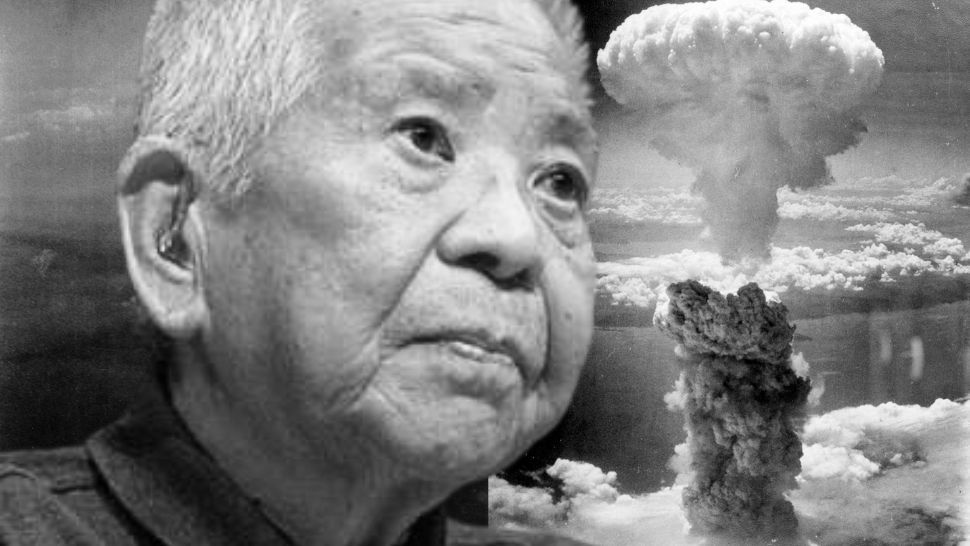
At 8:15 in the morning, Yamaguchi was walking toward the Mitsubishi shipyard. The sky was clear and bright. He heard the roar of an airplane engine above him. Looking up, he saw a single American bomber, the Enola Gay, drop a small object on a parachute. Then the sky ripped open.
A blinding flash of white light filled the air, followed by a roar that shattered his hearing. The force of the explosion threw him into the air like a dry leaf. He landed in a potato patch, blacking out for a brief moment. He was less than two miles from ground zero. The bomb, named Little Boy, had just wiped out the city center, killing tens of thousands of people in an instant.
When Yamaguchi opened his eyes, total darkness covered the city. Dust and ash rose high into the air, blocking the morning sun. His left ear was ruined. His face and arms burned with fierce heat where his skin was exposed. He wrapped bandages around his wounds and searched for his two coworkers, Akira Iwanaga and Kuniyoshi Sato. To his relief, both men were alive.
The Long Walk Through a Ruined City
The three men spent a terrible night in an air raid shelter. Flames roared through the streets around them. People wandered in shock, crying out for water and searching for loved ones. It felt like the end of the world, but Yamaguchi had only one thought in his mind. He wanted to get home to his wife and baby in Nagasaki.
The next morning, August 7, they walked through the ruined center of Hiroshima to reach the train station. Bridges were burned to steel skeletons. The river was filled with floating debris. They had to pick their way carefully over hot bricks and fallen electric wires. If you want to read another strange story about things found underwater, read about the ship found perfectly upright on the sea floor.
Against all odds, the local train line was still working on the edge of town. Yamaguchi squeezed into a crowded carriage packed with injured refugees. The train chugged slowly down the tracks, heading west. He sat in pain for hours, holding his burned arms against his chest. He arrived in Nagasaki early on August 8 and dragged himself home.
His family could barely recognize him. His face was swollen and dark from burns, and his hair was singed short. His wife thought he was a ghost at first. A doctor bandaged his wounds, but Yamaguchi refused to stay in bed. He was a dedicated worker, and he felt he had to report to his boss the next day.
How Did He Survive the Second Blast in Nagasaki?
On the morning of August 9, Yamaguchi pulled on his clothes and limped into the Mitsubishi office in Nagasaki. His body throbbed with pain, but he sat down at his desk. At 11:00 AM, he began describing the nightmare of Hiroshima to his supervisor.
His boss stared at him in disbelief. He told Yamaguchi he was crazy. How could one single bomb destroy an entire city of thousands of buildings? Yamaguchi tried to explain the giant flash, the heat, and the sudden shockwave that flattened everything in sight.
Right at that moment, at 11:02 AM, the room turned blindingly white. The American bomber Bockscar had just dropped Fat Man, a plutonium bomb, over the Urakami Valley in Nagasaki. Yamaguchi fell to the floor seconds before the shockwave blew out the windows and tore the walls apart.
He was once again less than two miles from ground zero. The heavy desks and thick building walls saved him from the worst of the flying glass. His bandages blew off in the blast, but he had no new severe cuts. The city outside was reduced to smoking rubble in seconds. He had just witnessed the only two nuclear attacks in human history, right from the center of both towns.
Panicking about his family, Yamaguchi ran out into the ruined streets. His neighborhood was badly destroyed. He ran past burning houses, fearing the worst for his wife and young son. When he reached his property, he found them alive in a small shelter. His wife had taken the baby out to buy burn lotion for Yamaguchi when the bomb went off, and they had ducked under cover just in time.
The Physical Toll and the Long Recovery
The days after the second bomb were a brutal fight to stay alive. Basic survival skills were all people had left in the ruins. Yamaguchi developed a high fever that lasted for weeks. Radiation sickness hit his body hard. His hair fell out, his burns turned bad, and he vomited constantly.
For weeks, he could not keep food down. His wife nursed him at home with almost no medicines available. Many people around them died from severe radiation damage, but Yamaguchi pushed through the fever. Slowly, his body started to rebuild itself. His skin healed, though it left heavy scars on his left side. His left ear remained deaf for the rest of his life.
Japan surrendered on August 15, ending World War II. As the nation rebuilt, Yamaguchi slowly went back to work. He served as a translator for the American occupation forces because he spoke good English. Later, he returned to his old job as an engineer at Mitsubishi, raising three children with his wife.
For decades, Yamaguchi chose not to speak publicly about what he saw. He just wanted a quiet life with his family. He knew he was lucky when thousands of others died. He kept his injuries hidden under long sleeves and quietly carried on with his daily routines.
Why Did He Decide to Tell His Story?
As he grew older, Yamaguchi began to feel a deep duty to speak out. He realized he had a rare voice that needed to be heard. He wanted future generations to understand the true horror of atomic weapons. In his eighties, he wrote a memoir and began giving interviews to newspapers and filmmakers.
In 2006, he traveled to New York City to speak at the United Nations. He walked up to the podium on weak legs and spoke to world leaders. He told them that having lived through two atomic blasts, it was his job to tell the world to get rid of such bombs forever. His story is a classic human-interest story that shows how strong the human body and spirit can be under extreme pressure.
In 2009, the government of Japan finally gave him official status as a double survivor, known in Japan as a Nijyuu Hibakusha. While hundreds of people were known to have been in both cities during the blasts, Yamaguchi was the first person recognized by law for surviving both ground zeroes. To learn more about how ordinary people live through amazing history, read our stories of historical survival and human strength.
Yamaguchi passed away peacefully on January 4, 2010, at the age of 96. He lived a full life despite taking two direct hits from nuclear blasts. He left behind a simple message for the world: peace is precious, and human life is surprisingly strong. When you face a tough day, remember Tsutomu Yamaguchi, the man who stood in the middle of two nuclear explosions and kept walking forward.


Comments
Post a Comment